


The magic a small dog called Maisie brings to the lives of vulnerable young people in school
The magic a small dog called Maisie brings to the lives of vulnerable young people in school https://thejaneevans.com/wp-content/themes/corpus/images/empty/thumbnail.jpg 150 150 Jane Evans https://secure.gravatar.com/avatar/1b06bd036211b82cdba19b095bacdad4?s=96&d=mm&r=g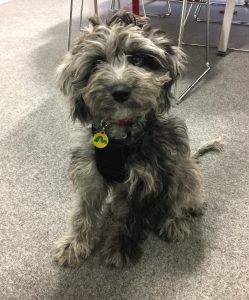
The magic of Maisie!
Meeting the magic of Maisie
I arrived early to Mayfield Secondary School, a very modern complex in the heart of an area of complex needs. A warm greeting from a kindly receptionist made me feel I wasn’t annoyingly early, even at 7.40 a.m. on a wintry November Friday which stood between the much needed half-term break for all the exhausted staff and students. . I was there to deliver a training day on ‘Attachment awareness in practice’ for around 100 staff. Little did I now that I would soon meet an 18 week old puppy who would be a perfect example of ‘attachment in practice!!’
Collected from Reception by a welcoming Head of Inclusion, I was shown to her office, on the way she dealt in a compassionate and respectful way with a pupil who had unexpectedly appeared ‘out of the blue’, on the teacher training day! As we approached the office, so I could drop off my stuff and collect a welcome coffee, I was asked, “Do you like dogs?” My response of, “I love them”, meant a moment later I met the magic of a small dog called, Maisie.
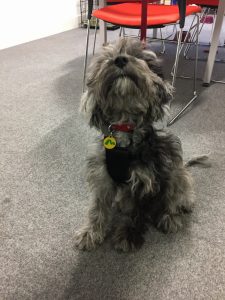
My heart melted as I stared down at an exuberant mass of wriggling, joyful, welcoming fur. Maisie is a recent addition to school life at Mayfield, where she can be mostly found in the inclusion unit, ‘The Zone.’ For whatever reason a young person is there, struggling to stay in class, additional learning or social and emotional needs, they have access to the calming, soothing, loving presence of this adorable puppy. Although very young, Maisie ‘gets’ what the children need as she is all about intuition, having virtually no intellectual brain. Maisie models what we all need to pay more attention to, unconditional love and connection. Maisie works mini miracles on a daily basis.
Multi-purpose Maisie
The youngsters read to Maisie and pay attention to what she seems to enjoy most. They walk her and have a sense of ‘this is something I can do well’. They interpret her emotional responses to them and what goes on around her, thus developing more emotional awareness and literacy. Maisie builds relationships for the children using her unconditional love so they get to feel and experience it. Maisie requires gentleness and playfulness which may be skills the young people haven’t had opportunities to develop and test out. Maisie gives some youngsters a reason to come to school, so their attendance record and access to caring adults improves. In short, Maisie is MAGIC!
As if that wasn’t enough! Maisie also gives members of staff a reason to pop in to The Zone and interact with the staff and children in a more at ‘attachment-rich’, relational way. Unknowingly, Maisie provides opportunities for regulation of stress which improves everyone mental and physical well-being.
What about those who are scared of dogs?
Of course, no one has to engage with Maisie. A real benefit is that she can offer safe, small experiences to be around a safe, loving dog on their terms to address their fear.
Pets provide attachment opportunities, humans can learn from!
On the Monday before I went to Mayfield, I had been training with a range of professionals who work with vulnerable young people and families. They talked about difficulties with engagement and retention and asked for my input. I responded, as I often do, if you have a dog, offer to walk it with the young person as it will take the pressure off them and make talking and interacting much more natural as you can use the dog to soothe them and to offer ways of exploring behaviours and emotions.
Not every setting can have a Maisie dog but it’s worth considering some kind of animals as they are great vehicles for offering non-pressurised ways of relating to others, and teaching empathy and emotional intelligence. Animals don’t and can’t over-think things; they behave intuitively which is what children and young people connect with as it’s honest and pure, just like them.

Leave a Reply